Author
Written by
Tamanazaryabparyani
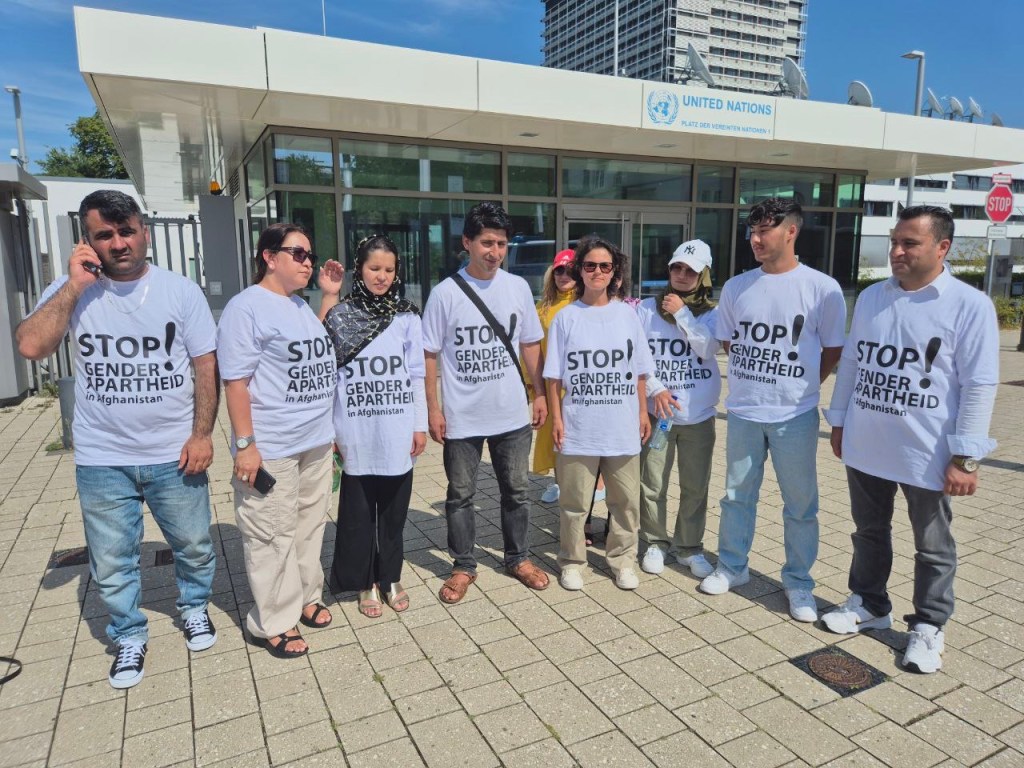
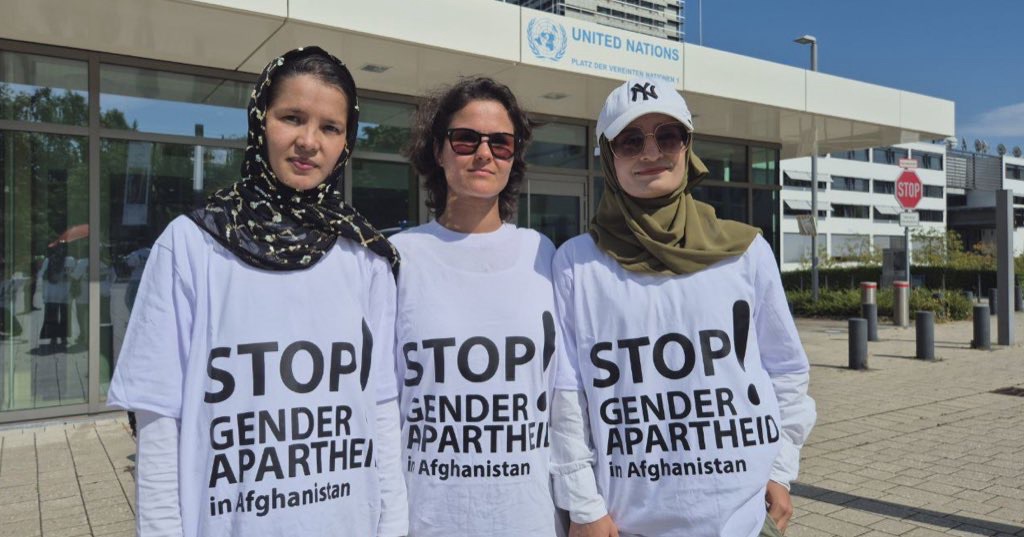
I was born in Kabul Afghanistan a land whose name for many is intertwined with war, insecurity and restrictions on women. I cannot say that image is false But for me, Afghanistan was not only the sound of explosions, it was also the quiet collapse of a young girl’s dignity. What I felt most in my childhood and adolescence was not the sound of bullets, but the weight of inequality an inequality justified in the name of religion and enforced by women who were themselves victims of the same patriarchal structure. One day at school I was humiliated and punished because a few strands of hair had slipped unintentionally from under my veil. Another day I was punished again simply for spending recess beside a girl labeled homosexual. The punishment was so harsh that I kept asking myself: What was my crime? Just sitting with a friend who was just a lesbian but? Is that a crime? We wore school uniforms, yet some teachers and administrators behaved as if we were their personal property. We had to stand, sit and even think the way they wanted. Before 2013, when I joined a social organization and was required to have a mobile phone for coordination, a few slaps were the answer to my “audacity.” The school principal took my phone home to check whether any man had called me. At the time, I was exhausted by such treatment but I did not fully grasp the depth of the tragedy. Now, looking back, I understand: the control of a teenage girl’s body, voice and even her communications an inhumane deprivation of freedom carried out by women who were themselves shaped by the same oppressive society. In the final years of school, I found another way to breathe: Olympic weightlifting. The cold iron of the weights felt warmer than many of the stares around me. Each time I lifted a barbell, it was as if I set down a portion of the humiliation I carried. I won medals. I stood. I fought not only against the weights but against the mindset that said, “Girls are weak.” The sport was constantly labeled “masculine” because it was heavy but I learned to turn heaviness into strength. During the 2014 elections, although I was not yet old enough to vote, I campaigned for a presidential candidate. Today I may see that decision as naïve or even mistaken but at the time it was driven by hope, a hope for even a small change in a country where women were always called the second sex. In 2017, I entered university to study law and political science. I believed university would be a space for freer thought, yet inequality lived there too. One day, I was expelled from an exam session because my scarf was resting on my shoulders instead of covering my head. Another day, I was summoned to the office because my trousers were considered too tight as if my body itself were a disciplinary case. This happened at a private university where I paid tuition to attend yet I still was not the owner of my body or my choices. I grew up in Kabul, a city where many women were deprived of education, survivors of years of jihad and Taliban rule. To many, I was not a good girl. Some of my father’s relatives looked at me with hatred perhaps they still do. But I learned that others approval is not the measure of a righteous path. I was never a good girl or a good woman and I don’t want to be a good woman I want to be a good human being because that’s who I’m. Alongside my studies, human rights activism became inseparable from my life. I believed and still believe that women in Afghanistan must not remain shadows. We are human beings not appendages to men. In 2021, when the Taliban regained power, I chose to stay in country, I did not see fleeing as a solution. But in 2022, I was arrested by Haqani group and I was in there prison like a dirty dog, that’s what they called me. Because they said I disrespect their religion and they are allow to do anything with me, whatever they want. I was tortured because of my past activism and the protests I continued to join. There, I realized what was happening was not merely restriction but an organized project to erase women from society. They claim a woman’s presence in public causes corruption, that a woman must remain at home only a mother, only a wife, nothing more. I spent nearly a month in prison. There were days when death seemed easier than continuing in that darkness. The physical and psychological torture was so exhausting that at times I saw suicide as an escape. I went on a hunger strike, I wanted at least my hunger to be something I controlled but I even I was not allowed to continue it for a long time. After about a month, I was released with my sisters wounded, but unbroken. After my release, I was banned from leaving the country. They offered me to stay in the country and work for them. They offered me security guard, car, Home without paying and have money monthly to spend how I want. they said you can live how you want. No one will look at you in a bad way, we promise. The job offer was to do some interviews about them with the media, inside country and outside of Afghanistan. They wanted to use me like a bird in a golden cage. But I was not interested for a life like that and I was not what they wanted. After release of the prison, For months I was hid in different houses. Fear became a constant shadow, I could not even trust my own. One midnight, I just left my home without knowing whether I would ever return. Months after my release, I wanted to continue the protests. I contacted fellow women protesters I had previously worked with, but no one dared to join me out of fear. At that time threats against my family intensified. My family endured continuous psychological torment because of our imprisonment and the lack of contact with us. A family that had suddenly lost four young daughters, uncertain whether they would ever see them again hoping, yet unsure if that hope would ever become reality. In those days i became completely alone. I understood what loneliness truly means exactly like the prison cell where I was isolated and forbidden from speaking to anyone. Seven months is a long time in silence and endless suffering. Eventually, I decided to break that silence and find a way out. I searched for a path that would at least allow me to raise my voice; otherwise, I would have suffocated in that painful quiet. Finally, my sisters and I went to Pakistan and were later transferred to Germany I lived for more than two years in a refugee camp, without sufficient access to healthcare or psychological support. Yet even there, I could not remain silent. I came to understand that what Afghanistan women face is not merely restriction, it was not just gender, discrimination, or Gender persecution, but a form of gender apartheid. In July 2023, we launched The campaign against to Stop Gender Apartheid in Afghanistan. On August 12 of the same year, we began tent sit-ins and this voice continues. Still we are strong in our way and trying to make sure one day, the world will accept, what happens in Afghanistan was Gender Apartheid. The country’s must Recognize Gender Apartheid in Afghanistan as a crime against humanity. Despite not having permanent residency, despite exhaustion, despite the immense weight I have carried, I remain standing. I am a girl from Kabul who learned to breathe through ashes. I lifted weights, endured prison, experienced exile but I did not lay down my voice. What I want is simple, and yet infinitely difficult: The right to a dignified human life for women. A world where gender does not determine destiny. My story is not only a story of suffering; it is a story of standing. And this standing continues.
 Tamanazaryabparyani.org